

Published: February 20, 2026
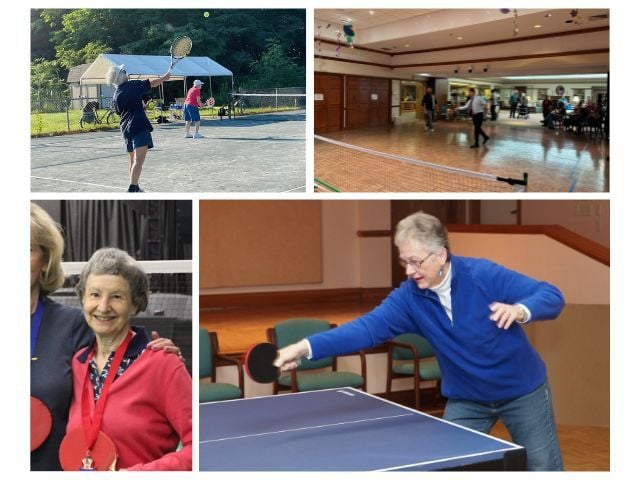
Whether it’s pickleball, table tennis or tennis, running around a court with a racket in tow might just be what the doctor ordered, according to Harvard Medical School."In many ways, racket sports like tennis, squash, badminton, racquetball, Ping-Pong, and other variations are the ideal exercise for many older adults," says Vijay A. Daryanani, a physical therapist and personal trainer with Harvard-affiliated Spaulding Outpatient Center. "Besides offering a good cardiovascular workout, they can help with both upper- and lower-body strength at one time. They can be played at any age, can be modified to fit most fitness levels, and do not involve a lot of equipment."
Research for playing racket sports is convincing. Studies from Britain and the United States found that playing racket sports for about 10 years was linked to a lower risk of death during the follow-up period than any other sport or form of exercise studied. A Denmark study found tennis players lived longer than swimmers and other recreational athletes, and a decade longer than sedentary people of the same age.
More health benefits
Unlike most other exercises, playing racket sports requires lateral movement.
"Most of our lives are spent moving forward, and that includes our exercise," says Harvard’s Daryanani. "Racket sports force you to move both back and forth and side to side. This helps improve balance and weight shifting, which can lower your risk of falls."
Racket sports, especially table tennis, strengthen cognitive functions because the activity requires quick decision-making, hand-eye coordination and concentration.
And these sports serve as social gatherings, which is one reason pickleball has become so popular with older adults.
Writes Miguel Arce Renteria, assistant professor of neuropsychology at the Columbia University
Vagelos College of Physicians and Surgeons:
“Various studies have shown how social engagement is important for late-life brain health. In fact, the surgeon general recently stated that loneliness and social isolation are detrimental to one’s health. Regrettably, older adults are more likely to be affected by social isolation.
I’m excited about seniors embracing pickleball. it can foster wonderful social interactions during the match but also before and after, helping older adults create new social bonds or strengthen their established social network.”
Kendal residents enjoy racket sports
A few years ago, three dozen Kendal residents signed up to learn more about pickleball and that interest has led to twice weekly games – sometimes more – in Heiser Auditorium. “We have about 8 residents who play regularly, and a few more - including staff - who stop by occasionally,” says coordinator Jeanne Berger.
Kendal residents play with foams balls, which are quieter and safer for both players and walls, and flexible rules.
“We play without scoring or worrying about who is serving or even how many bounces the ball makes. We just continually keep a ball in play, and I think we get more exercise and are more encouraging to beginners. People say that playing intensely and competitively gives you that extra edge and makes you try harder. But we prefer to play safely and thoughtfully, not lunging for that ball just out of reach. Our main rule is ‘No Falling,’ Jeanne says.
And yes, pickleball injuries, such as shoulder impingement and sprained ankles, are on the rise as more people get into the game. Older adults are at a higher risk of experiencing injuries due to changes in balance, muscle strength, and joint flexibility, according to the University of Texas at Austin Dell Medical School.
“These factors increase the risk of falls, strains, and sprains, especially in the knees, shoulders, and wrists,” explains Dr. Mica Guzman, Primary Care Sports Medicine Clinical Director. “However, staying active is beneficial—just remember to take necessary precautions.”
Table tennis has been a fixture at Kendal even longer than pickleball. The activity began informally early on when a resident donated a ping pong table, then got more serious as “table tennis” in 2007 under the leadership of Sidney Rosenfeld and now Phil Pritchett.
“We still play 3 times a week for 2 hours per session in the Heiser Auditorium, and we deploy 3 tables. Currently, we have some 8 regulars who come almost every session and stay the whole 2 hours. We also have 3 or 4 more others who come irregularly, including from time to time some who have not ‘played in 50 years’ but would like to resurrect their skills,” Phil says. “Last year two of our regulars travelled to Columbus to participate in the Ohio Senior Table Tennis Olympics, Sandi McClennen, finished second in her age group and received a medal.”
Kendal’s two outdoor tennis clay courts were built soon after the life plan community opened in 1993, and Kendal tennis players will be back on the courts in spring.